Health Effects
How does smoking affect your lungs?
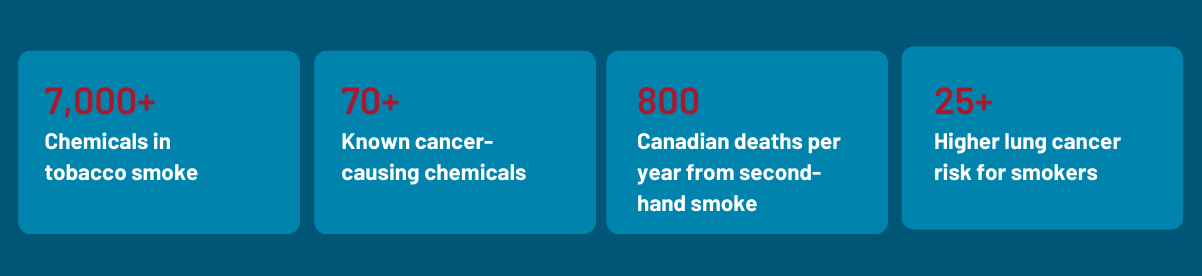
Tobacco smoke contains between 4,000-7,000 chemicals. At least 70 of these chemicals are known causes of cancer. When you smoke, these chemicals combine to form a sticky tar. This tar sticks to clothing, skin, and the cilia (tiny hairs) that cover the insides of your lungs and help to clean out dirt and germs. If the cilia are covered in tar they can’t clean your lungs properly, so germs, chemicals, and dirt remain trapped in your lungs and cause diseases.
When tobacco smoke is inhaled, the smoke quickly travels to the lungs. Chemicals in the smoke enter the bloodstream, and the blood is then carried to the rest of the body. Because tobacco smoke contains carbon monoxide which displaces oxygen in blood, organs may not be able to receive the oxygen they need. Smoking has been linked to various diseases that affect many different organs in the body, including cancers, COPD, and asthma.
What is second-hand smoke?
 Second-hand smoke is the smoke produced from the burning end of the cigarette and breathed out. Inhaling second-hand smoke is highly dangerous as it exposes the lungs to many toxic and carcinogenic chemicals.
In adults, second-hand smoke inhalation may cause heart problems, lung cancer, Chronic Obstructive Pulmonary Disease (COPD), breathing problems, excessive coughing, and nasal/chest infections. Every year in Canada, second-hand smoke causes 800 deaths from lung cancer and heart disease in people who don’t smoke. In children, second-hand smoke is especially dangerous. This is because children breathe faster and their lungs are still developing, making them more at risk of harmful effects of second-hand smoke. This has been proven to damage the immune system and cause asthma, bronchitis (inflammation of the lungs), and ear infections. In infants, second-hand smoke can cause SIDS (sudden infant death syndrome).
Smoking in enclosed spaces increases risks associated with second-hand smoke. Toxins can linger in indoor surroundings long after the person smoking leaves the room, often accumulating in different areas of the room such as on rugs, curtains, clothes, furniture, and others.
What is Third-Hand Smoke?
When cigarette smoke seems to disappear, it leaves behind invisible chemicals. This toxic residue sticks to clothing, walls, furniture, carpets, and car seats, and can linger for months or even years.
Health Risks of Third-Hand Smoke:
- Toxins & Carcinogens: Third-hand smoke residue reacts with indoor air to form harmful chemicals, including cancer-causing compounds.
- Breathing & Asthma Issues: Exposure can trigger asthma attacks, coughing, and respiratory infections, especially in non-smokers.
- High Risk for Infants & Children: Babies and toddlers absorb more of these chemicals because they crawl on carpets, touch contaminated surfaces, and put their hands or objects in their mouths.
What is nicotine addiction?
Nicotine is a naturally occurring chemical compound and brain stimulant found in tobacco plants, as well as in commercial cigarettes and vapes. When inhaled, it travels to the brain very quickly, triggering a release of chemical messengers that cause temporary feelings of happiness, calmness, and alertness. Specifically, nicotine increases levels of dopamine, the chemical messenger responsible for allowing you to feel pleasure and a temporary rush.
Eventually, the effects of nicotine wear off, and these feelings of pleasure and alertness fade. As the brain quickly adapts to these chemical shifts, it begins to crave nicotine constantly to replicate that feeling. This cycle is called addiction. Because a young person's brain is still actively growing and developing, it adapts and rewires itself much faster than an adult's brain, making youth significantly more vulnerable to becoming addicted to nicotine quickly.
How does nicotine addiction work?
- Cigarette smoke/vape aerosol is inhaled.
- Nicotine is absorbed by the lungs and travels through the bloodstream.
- Nicotine reaches the brain and stimulates the production and release of two main chemicals: Adrenaline (increases heart rate and blood pressure) and Dopamine (induces pleasure).
- After a few hours, the user’s blood nicotine levels drop (the main reason why people who smoke often crave more products.)
How does smoking affect the body?
Smoking can affect short-term memory and concentration. Immediately after inhalation, nicotine increases blood pressure and affects the functioning of the respiratory system, making it difficult to breathe. Smoking has immediate consequences on oral hygiene as particles of smoke remain trapped in the mouth and throat, causing bad breath and yellow teeth. Throat irritation is common after smoking a cigarette.
In the long-term, smoking causes COPD, heart disease, diabetes, stroke, and raises the risk of lung cancer by 25 times. Smoking also damages oral health, causes problems with the immune system, and can impair vision and speech. The chemicals in tobacco smoke damage skin cells and can lead to irreversible skin damage and aging.
What is nicotine withdrawal?
 Nicotine withdrawal is the set of physical and psychological symptoms felt as nicotine wears off. These symptoms are temporary and are often signs of healing.
Withdrawal symptoms may include nervousness, dizziness, shakiness, headaches, increased appetite, feeling down, cravings, difficulty concentrating and sleeping, and irritability. Coughing results as lungs work to clear out tar and dirt left from cigarettes.
Cravings for cigarettes may last for months, even once the other withdrawal symptoms are gone. Some people may find that their desire to smoke is especially strong when they’re stressed, although others may crave cigarettes when out with friends or bored.
Tobacco & Stress
 Some people start smoking to manage stress. It’s important to recognize that stress is normal and that there are many healthy ways to manage it.
MYTH: Nicotine helps reduce stress.
TRUTH: Nicotine is not an effective way to manage stress.
Although nicotine may trick the brain into thinking smoking is useful for stress management, smoking is just a distraction. In between periods of smoking, nicotine withdrawal increases heart rate, raises blood pressure, worsens mood and concentration, and ultimately increases overall stress levels. In the long-term, both mental and physical stress levels increase because of nicotine addiction.
A few effective methods to manage stress are: talking about it with friends, getting exercise, deep breathing, listening to music, and staying hydrated. If stress persists, professional help is available.


