Asthma Fall Flare-Ups: Preparing for the September Spike
Did you know that asthma emergencies rise sharply every September, just a few weeks after school starts?
For children and adults living with asthma, fall can bring several asthma triggers together at the same time. Parents, caregivers, teachers, and students can all take steps to help reduce the risk of back-to-school asthma flare-ups.
What is the September Spike?
The September Spike is the sharp increase in asthma symptoms and asthma emergencies that happens soon after children return to school.
As summer winds down, families start preparing for a new school year with school supplies, lunch kits, and new routines. For children with asthma, back-to-school preparation should also include steps to help prevent worsening asthma symptoms.
Why Do Asthma Flare-Ups Increase in September?
There is no single cause of the September Spike. Instead, several factors come together to create a “perfect storm” for fall asthma flare-ups.
Respiratory viruses
When children return to classrooms, sports, activities, and other group settings, they are suddenly spending more time around other people — and more respiratory viruses.
Colds and other respiratory infections are among the most common asthma triggers in children.
For someone whose asthma is not well controlled, a respiratory infection can lead to worsening symptoms and sometimes an unexpected visit to a healthcare provider or emergency department.
Cold, dry air and changing weather
Saskatchewan weather can change quickly in the fall. Cold, dry air can irritate sensitive airways and may trigger coughing, wheezing, chest tightness, or shortness of breath.
Rapid temperature changes may also make asthma symptoms harder to manage for some people.
 Environmental triggers
Fall can bring several environmental asthma triggers, including:
- ragweed and other pollens;
- dust;
- mould spores;
- wildfire smoke; and
- poor outdoor air quality.
In Saskatchewan, harvest season can add extra dust and particles to the air. Harvesting grain can create significant dust, while grain, straw, vegetation, and damp organic material may release mould spores. Windy conditions can carry these particles beyond farms and fields.
Stress and changing routines
Back-to-school can be exciting, but it can also be stressful. Stress does not cause asthma, but it can make symptoms feel worse and may contribute to poorer asthma control. Busy schedules can also affect sleep, physical activity, and medication routines.
Changes in asthma medication routines
Summer can sometimes mean more relaxed routines — including forgetting or skipping asthma medication. For people who have been prescribed a daily controller medication, taking it consistently is an important part of keeping asthma controlled and reducing the risk of flare-ups.
The September Spike Can Affect Adults Too
School-aged children are not the only people affected. Children with respiratory infections can bring those viruses home to parents, siblings, grandparents, and others. Adults living with asthma can also experience an increase in asthma symptoms and flare-ups during the fall.
How Can You Prepare for the September Spike?
Reduce your risk of respiratory infections. A few simple habits can help:
- Wash your hands often with soap and water.
- Avoid touching your eyes, nose, and mouth when possible.
- Clean frequently touched surfaces.
- Stay home when you are sick.
- Avoid close contact with people who are unwell when possible.
- Consider wearing a well-fitting mask in crowded indoor spaces or places where respiratory infections may be more common.
- Keep recommended vaccinations up to date.
Protect your airways from cold, dry air. When the weather turns colder:
- Cover your nose and mouth with a scarf or face covering when outside.
- Warm up gradually before exercising outdoors.
- If cold air is a known asthma trigger, follow the instructions in your Asthma Action Plan.
Reduce exposure to environmental triggers. Know your triggers and plan ahead.
- Check local pollen levels and air-quality conditions.
- Keep windows and doors closed when pollen, dust, wildfire smoke, or outdoor air pollution is high.
- Consider using a portable air cleaner with a HEPA filter in the rooms where you spend the most time.
- Avoid raking or handling damp or mouldy leaves if mould is an asthma trigger.
- Reduce indoor dust by cleaning regularly and keeping clutter to a minimum.
- During harvest season, limit exposure to dusty conditions when possible.
 Take asthma medications exactly as prescribed, even when you are feeling well. Daily controller medication helps keep inflammation in the airways under control and can reduce the risk of asthma flare-ups.
Before school begins:
- Refill or renew asthma prescriptions.
- Check medication expiry dates.
- Make sure you have enough medication available.
- Review your inhaler technique.
- Schedule an asthma check-up if symptoms have changed or asthma has not been well controlled.
- Review your child’s Asthma Action Plan.
Support sleep, routine, and emotional well-being. Back-to-school routines can be busy. Simple habits can help support physical and emotional health.
- Keep routines steady. Try to go to bed and wake up at similar times each day.
- Stay active. Movement is good for the body and mind. When asthma is well controlled, children with asthma should be encouraged to participate in physical activity.
- Take a breather. Make time for rest and quiet activities, even during busy weeks.
- Stay connected. Encourage children to talk about how they are feeling and reach out for support when needed.
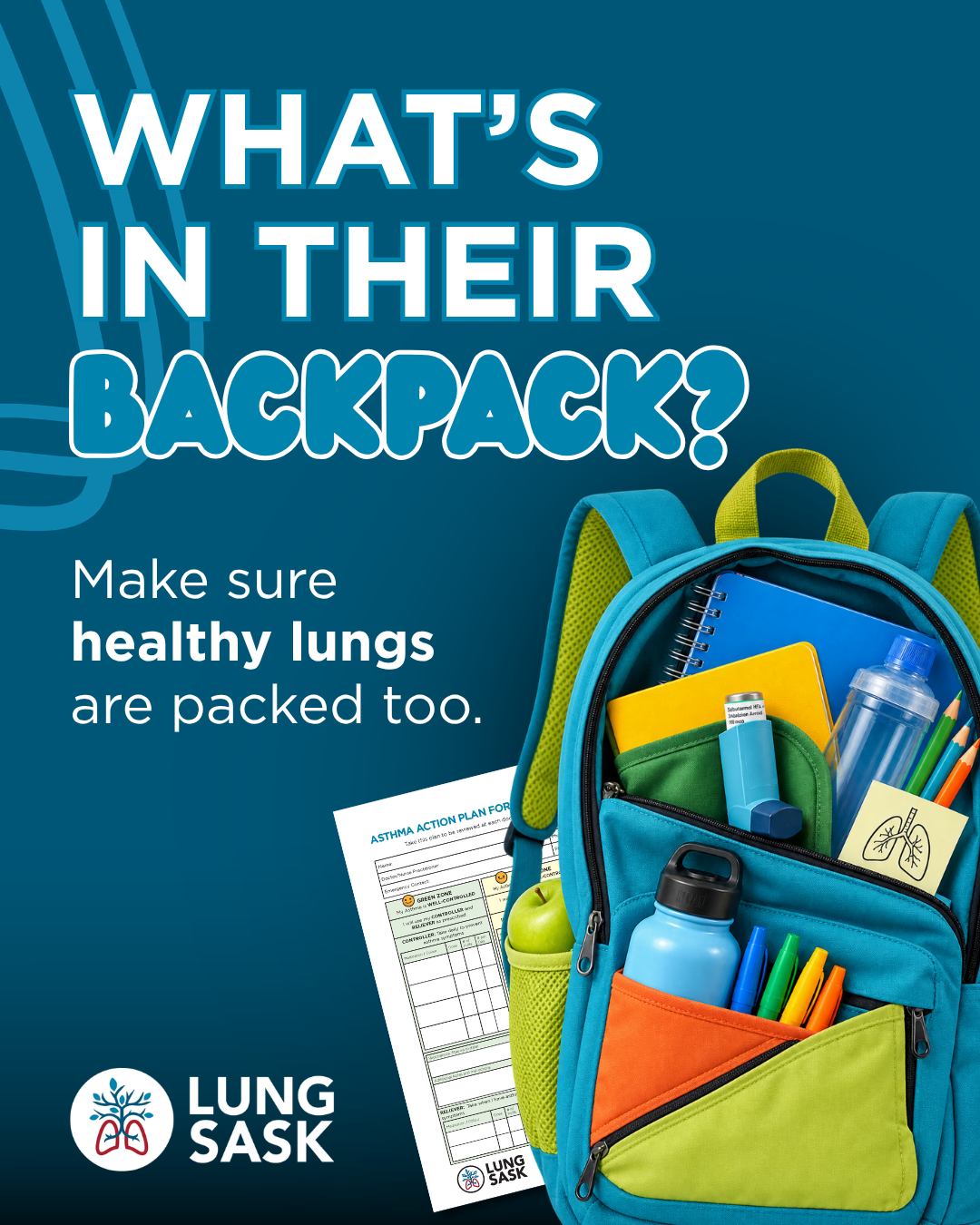
What’s in Their Backpack? Keep Lung Health Top of Mind This Back-to-School Season
Along with pencils, notebooks, and lunch kits, make asthma care part of your back-to-school checklist.
 Asthma medications. August is a good time to get your child’s asthma routine back on track.
- Refill or renew prescriptions.
- Check medication expiry dates.
- Make sure controller medication is being taken exactly as prescribed.
- Make sure your child has access to their reliever medication when they need it.
- Aim to have enough medication available so you are not caught without it when school begins.
An Asthma Action Plan. Review your child’s Asthma Action Plan.
An Asthma Action Plan helps you, your child, and the adults caring for them understand:
- what good asthma control looks like;
- what to do when symptoms start to get worse; and
- when to get urgent medical help.
Share your child’s plan with their school when appropriate.
Good inhaler technique. Make sure your child knows when and how to use their inhaler.
Using an inhaler correctly helps make sure the medication gets where it needs to go — into the lungs.
An Asthma Diary. Consider using an Asthma Diary to keep track of symptoms, medication use, and possible triggers.
This information can also be helpful when talking with your child’s healthcare provider.
Asthma resources for kids. Help children learn about asthma in a way they can understand.
Explore:
A conversation with their school. Talk with your child and the people who care for them at school.
- Make sure your child and their teachers know what to do during an asthma emergency.
- Talk to your child’s teacher about their asthma.
- Make sure the school knows where your child’s asthma medication is kept and how your child can access it.
 Learn More
- Register for our Asthma Fall Flare-Ups Webinar
Learn more about the September Spike and how to prepare for fall asthma triggers. - Join our Asthma Community
Connect with information, education, and support for people living with asthma and their families. - Listen to Let’s Talk Lungs Podcast
Hear conversations about lung health with healthcare professionals and people with lived experience. - Tip Sheet for Parents
Health Canada’s Talking With Your Teen About Vaping tip sheet provides parents and caregivers with information about vaping, tips for starting the conversation and ideas for keeping the discussion open. - Watch Lung Health Videos
Explore practical lung health information and education from Lung Saskatchewan.