
Signs, Symptoms, & Causes of Interstitial Lung Disease and Pulmonary Fibrosis
Signs & Symptoms of Interstitial Lung Disease and Pulmonary Fibrosis
Most of us don’t think about our breathing until it becomes difficult. In interstitial lung disease (ILD) and pulmonary fibrosis (PF), scarring in the lungs makes it harder for oxygen to move into the bloodstream.
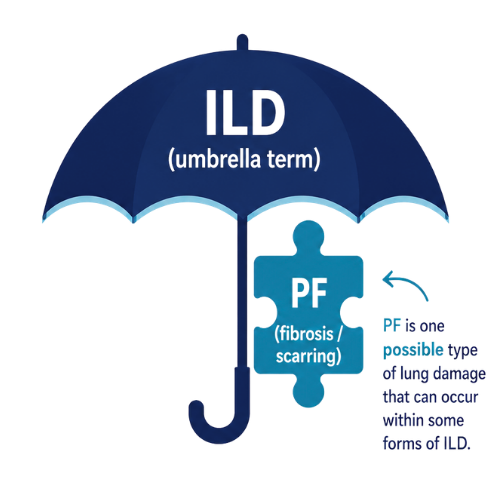
ILD and PF are related, but they are not the same thing.
- ILD is a broad category of more than 200 lung disorders that affect the tissue (interstitium) surrounding the air sacs in the lungs. These conditions can involve inflammation, scarring, or both.
- PF refers specifically to scarring (fibrosis) of the lung tissue. It is one possible outcome or feature of some forms of ILD.
ILD and PF may cause some or all of the following symptoms:
- Shortness of breath, especially during or after physical activity
- A dry, persistent cough
- Crackling sounds in the lungs (sometimes described as a “Velcro-like” sound) that a healthcare provider can hear with a stethoscope
- Rounding or widening of the fingertips or toes (called clubbing)
- Unintended weight loss
- Fatigue (feeling very tired)
- Weakness
Symptoms often develop slowly and may get worse over time. Speak with your doctor or nurse practitioner if you have these signs and symptoms.
Causes of ILD and PF
ILD can have many causes. Sometimes the cause is known. In other cases, no cause can be identified.
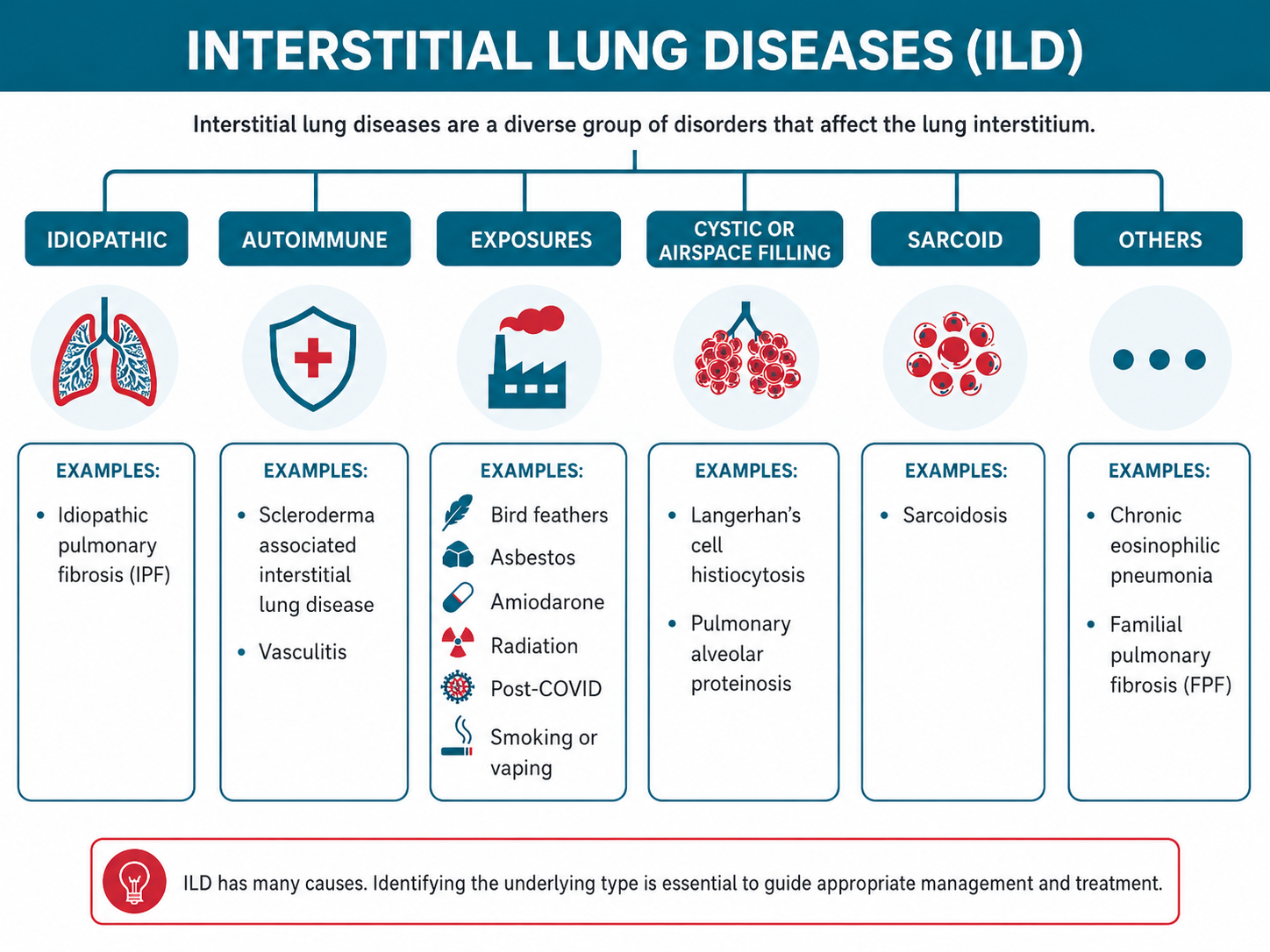
1. Idiopathic Pulmonary Fibrosis (IPF)
When no cause for pulmonary fibrosis can be identified the disease is termed idiopathic pulmonary fibrosis or IPF. Idiopathic simply means ‘of unknown cause. This is the most common type of ILD/PF. This is the most common cause of fibrosis.
Risk Factors for Idiopathic Pulmonary Fibrosis (IPF)
Although IPF is a disease of unknown cause, there are a number of potential risk factors for the development of IPF that are known. They include:
- Smoking Smoking increases the risk of lung damage and IPF.
- Environmental Exposures Certain jobs and occupations such as farming, raising birds, hair dressing, and stone cutting/polishing may be connected. Contact with livestock and different kinds of dust (metal, wood, vegetable and animal) are also risk factors.
- Viruses Some viral infections may play a role, but more research is needed.
- Gastroesophageal Reflux Disease (GERD) GERD is a chronic digestive disease. GERD occurs when stomach acid or content flows back into your food pipe (esophagus). This backwash (reflux) irritates the lining of your esophagus and is what causes GERD. GERD may also be related to IPF, however, more research is still needed in this area.
- Genetics Genetics can play a role in IPF. A very small percentage of people with IPF have reported two or more family members with the disease.
- Gender IPF is more common in men than women.
- Age IPF is more common in people 50 years and older. The risk increases with age.
2. Autoimmune Disease
Autoimmune diseases occur when the body’s immune system mistakenly attacks healthy tissue, thinking it’s a foreign invader. Some autoimmune disease linked to ILD include:
- Rheumatoid Arthritis
- Scleroderma
- Systemic Lupus Erythematosus (SLE)
Not everyone with these conditions develops pulmonary fibrosis, but the risk is higher than someone without an autoimmune disease.
3. Occupational/Environmental Exposures
Breathing in certain dusts or chemicals over time can damage the lungs. Examples include:
- Coal dust (coal workers’ pneumoconiosis)
- Silica dust (silicosis)
- Asbestos (asbestosis)
- Metal, wood, vegetable, or animal dust
- Exposure to livestock or birds
- Certain chemicals or inhaled drugs such as cocaine, zinc chloride, and ammonia
Some jobs that may increase risk include:
- Farming
- Bird handling or raising birds
- Hairdressing
- Stone cutting or polishing
- Long-term exposure increases the risk of lung scarring.
- Medical tests and treatments
Certain medication and treatment exposures can cause lung scarring. These may include:
- Certain chemotherapy medications
- Some antibiotics
- Some anti-inflammatory medications
- Radiation therapy to the chest
If you are concerned about medications affecting your lungs, speak with your healthcare provider.
4. Cystic or Airspace Filling
These are considered ILDs because they affect the lungs’ gas-exchanging areas. Some ILDs cause inflammation or scarring, while others cause cysts or fill the air sacs with material.
- Cystic ILD = abnormal air-filled spaces, or cysts, form in the lungs. The cysts can damage lung tissue and make breathing harder.
- Airspace-filling ILD = the air sacs become partly filled with fluid, protein, blood, or inflammatory cells, instead of air. This makes it harder for oxygen to move from the lungs into the blood.
5. Sarcoidosis
Sarcoidosis causes clusters of inflamed cells, called granulomas, to form in the lungs. These granulomas can inflame and stiffen the lung tissue, narrow the airways, and reduce oxygen exchange. Over time, ongoing inflammation may lead to permanent scarring, or fibrosis, resulting in ILD.
6. Others
Familial Pulmonary Fibrosis (FPF)
- Also known as genetic pulmonary fibrosis, FPF is typically recognized when two or more biological family members have pulmonary fibrosis.
- FPF is strongly linked to inherited gene mutations, but not everyone who carries the mutation will develop PF.
- The gene-environment (for example: smoking, exposure, autoimmune condition) interaction contributes to disease development, not simply genetics alone.